Photo: AFP/Nurphoto/Michael Nguyen
01/01/1970 01:00
The creation of the India–Middle East–Europe Economic Corridor (IMEC)—a transport route connecting India to Europe via both sea and land across the Arabian Gulf and the Middle East—marks a key step in global geopolitical realignment. It is designed as a targeted alternative to China’s Belt and Road Initiative (BRI). Launched at the 2023 G20 Summit, the project is backed by the United States, India, the European Union, and several Arab Gulf states.
Its purpose is to link the Arabian Sea to Jordan and Israel through a railway line running across the Arabian Peninsula. The corridor would also include three major Mediterranean ports—Haifa, Trieste, and Piraeus—potentially shifting Europe’s economic gravity from the northwest to the southeast. IMEC could reduce shipping times between India and Western Europe by up to fifteen days, opening new markets and offering a viable alternative to existing routes. Its vision is to build an open and diverse ecosystem that connects countries with differing strategic outlooks while ensuring reliable transport links.
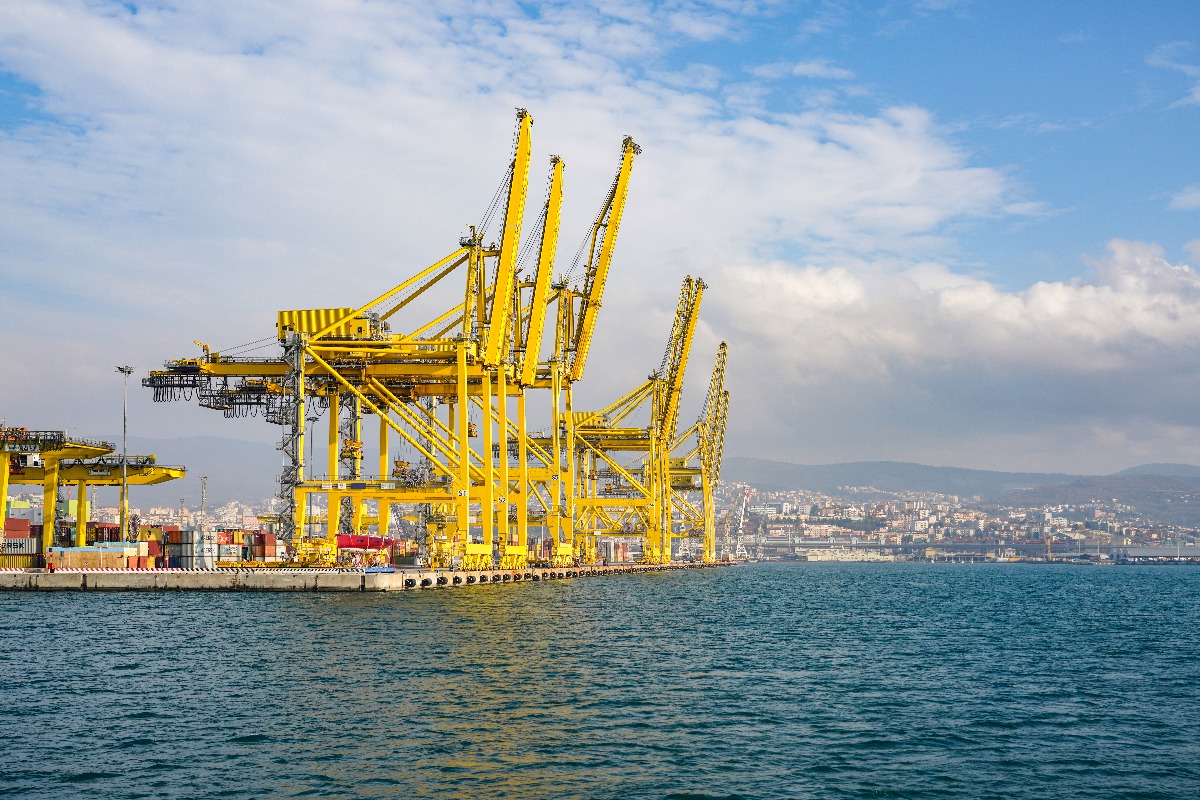
The corridor would serve as a guarantee of future-proof interregional cooperation between Europe, the Middle East, and South Asia. It also offers opportunities for northern Italy’s industrial centers, the rail links from Italy and Greece to Central Europe, and the coordination of maritime trade fleets. Italy, a committed supporter of IMEC, is already expanding the capacity of Trieste, a major logistics hub that could play a key role in freight flows toward Central and Eastern Europe.
Currently, Europe’s trade is dominated by western ports, yet Italy and Greece—through Genoa, Naples, Trieste, and Piraeus—are geographically closer by rail to both the emerging energy sources of the southeastern Mediterranean and the eastern economies of the EU. Italian Prime Minister Giorgia Meloni recently announced the integration of Trieste into the IMEC port system, strengthening Italy’s maritime sector. Notably, Rome’s entry into IMEC coincided with its withdrawal from the BRI in December 2023. Greece, with its strong shipping industry and growing role in the eastern Mediterranean energy sector, could become a crucial bridge between Italy and the Middle East. Since the announcement of the corridor, Greece has emphasized IMEC’s importance in its relations with Israel, as nearly all Indian shipments to Europe are expected to pass through Haifa. Bilateral trade between the two countries grew by 41.3 per cent between 2023 and 2024, and the trend is continuing.
For IMEC to become fully operational, regional stability will be essential. Since the announcement, instability in the Middle East has drawn attention away from the initiative, yet the Gaza conflict, Houthi attacks on Red Sea shipping, and unrest in Syria have not halted development. Dubai has invested USD 2.3 billion in a rail project connecting the UAE with Jordan, while Riyadh, under Saudi Vision 2030, has committed more than USD 4 billion to IMEC-related railway infrastructure.
It remains unclear how much strategic priority the United States assigns to this project and who will ultimately lead it. From a European perspective, this uncertainty makes it all the more vital to develop a coordinated EU-level strategy that addresses supply chain security, energy autonomy, and global partnerships together.
IMEC represents not only a commercial opportunity but also a geopolitical response to the accelerating transformation of the world order.
The author is an analyst at the Makronóm Institute