Photo: AFP/Imaginechina/Yu Fangping
25/11/2025 08:00
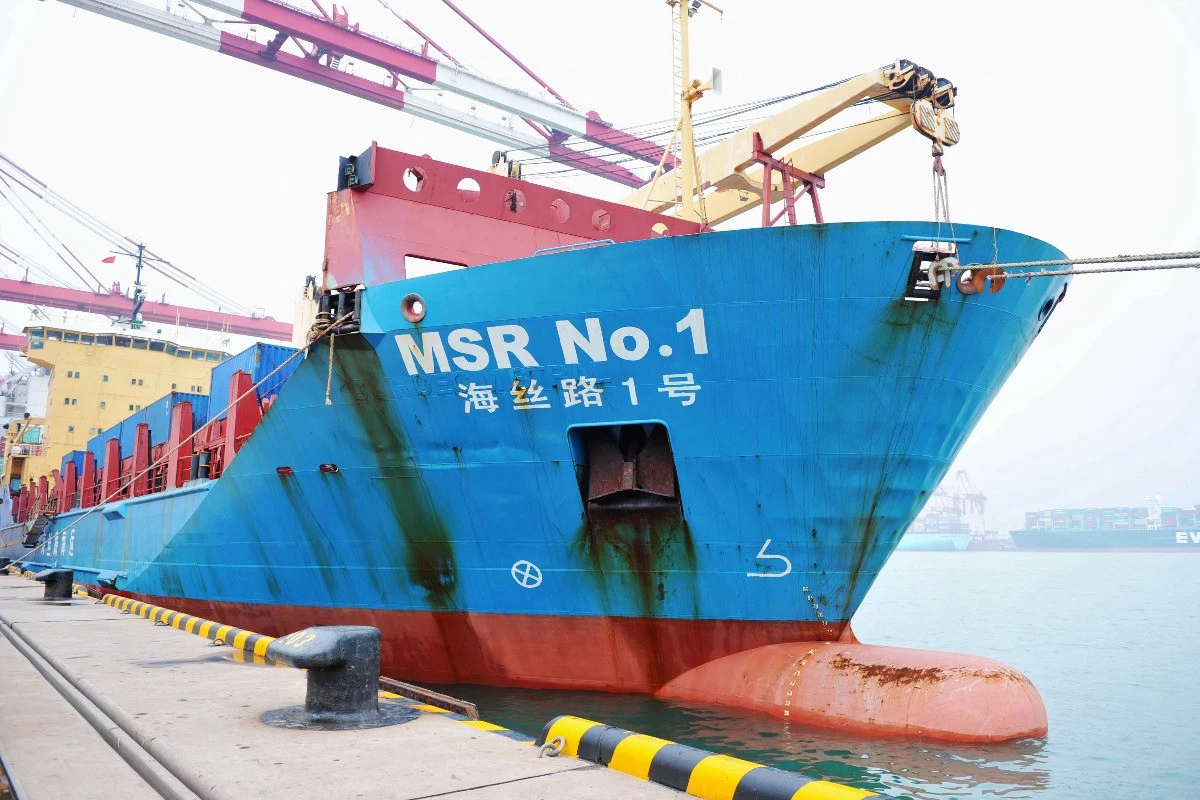
The Chinese logistics company SeaLegend recently achieved a remarkable feat: its container ship sailed from Ningbo–Zhoushan in China to Felixstowe in the United Kingdom in just 18 days—a route that would normally take at least 40 days through the Suez Canal. The experimental service, named “Arctic Express,” demonstrated that the northern route is now viable and can become a genuine competitor to the traditional southern maritime trade corridor.
The Arctic route offers several advantages. It is shorter and therefore faster; by halving travel time, it also significantly reduces fuel consumption. Estimates suggest a 30–60 per cent reduction in CO₂ emissions compared to the Suez route. It is no coincidence that SeaLegend optimized its Arctic service for the transport of time-sensitive, high-value goods such as batteries and energy storage units.
However, costs remain high. Smaller ship capacities, the use of icebreakers, and the need for specialized insurance raise transportation expenses. Moreover, international regulations prohibit the use of heavy fuel oil in Arctic waters, leaving cleaner but more expensive options such as LNG or low-sulfur fuels. For now, the new route will likely serve the premium goods market, while bulk commodities—grain and raw materials—will continue to move along the cheaper southern maritime lanes.
China obtained observer status in the Arctic Council in 2013, and in its 2018 White Paper officially introduced the “Polar Silk Road” concept as the northern extension of the Belt and Road Initiative (BRI). According to Beijing, the Arctic should be seen not as a theater of competition but of cooperation, with full respect for the sovereignty of the coastal states.
The new route crosses Russian territorial waters, making transit permits dependent on Moscow. Navigation would be impossible without Russian icebreakers, making Russia an indispensable partner. Moscow also benefits from Chinese participation—it brings revenue, infrastructure development, and economic cooperation at a time when Western sanctions have made China its primary partner even in the Arctic. Meanwhile, the United States and Europe view the deepening Sino–Russian partnership with concern. Analysts at the RAND Corporation note that Beijing is expanding its presence in the Arctic through economic influence, avoiding open conflict with states that have territorial claims in the region.
Although the northern route holds great promise for the future, a full-scale shift in global shipping remains unlikely for now. Arctic navigation is still seasonal, capacity is limited, infrastructure is underdeveloped, and costs remain high. Over the coming years, parallel systems may emerge: southern routes will continue to carry bulk goods, while the Polar Silk Road will serve cargoes that require speed.
For China, however, presence itself is a strategic advantage—a means of expanding economic influence, securing new transport options, and establishing a foothold in a region of growing importance. The Polar Silk Road is far more than a logistical question; it represents a new frontline in the global balance of power.
The author is a business journalist