Eurasia
25/11/2025 22:40
What was the purpose of establishing the Foundation, and who are its members?
Due to Hungary’s successful trade and governmental relations that embody the policy of Eastern Opening and promote connectivity, interest in our country has grown significantly throughout Eurasia. We found there was a clear need for an organization that could take an active role in fostering these relations across a wide range of fields.
The goal of the Friends of Connectivity Foundation is to ensure that Hungary becomes one of the winners of the new global order currently taking shape. Our activities focus on promoting mutually beneficial connections between East and West. The Foundation supports the expansion of ties among youth, cultural institutions, civil society, academia, and diplomacy. It also aims to broaden exchange programs, strengthen and support dialogue between generations and nations based on shared interests, and promote the presentation and recognition of each other’s countries.
The Foundation’s Board of Trustees includes diplomats and representatives from the worlds of science and media. I would like to highlight, among others, Levente Horváth, former Consul General of Shanghai and Director of the Eurasia Center, and Mariann Őry, journalist and Deputy Editor-in-Chief of Eurasia.
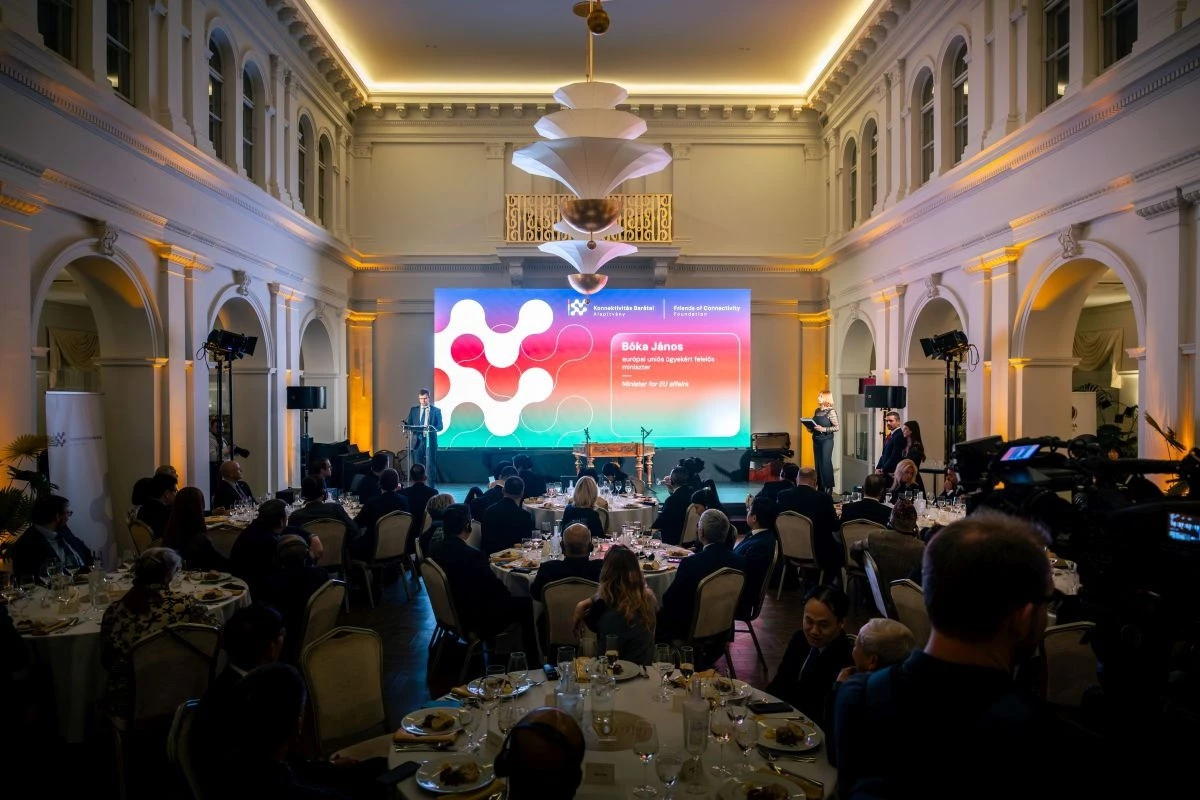
The Friends of Connectivity Foundation will hold its first public event at the end of November. What guests are you expecting, and what programs are planned?
At the initiative of Zsolt Németh, Chairman of the Foreign Affairs Committee of the Hungarian Parliament, and Yara Suos, Cambodian Vice President of the Centrist Democrat International, the Asia–Europe Political Forum—the Budapest session of the International Conference of Asian Political Parties (ICAPP)—will take place on 28 November, under the title Peace and Democracy in Eurasia. The event is being organized in cooperation with the Patriots Group of the Parliamentary Assembly of the Council of Europe (PACE). On 27 November 2025, the Friends of Connectivity Foundation will host the first Connectivity Gala, which will also serve as the opening gala dinner of the Asia–Europe Political Forum. Establishing a new tradition, we will present the Connectivity Awards to individuals who have shown outstanding commitment to the cause of connectivity. Many people are working to put connectivity into practice, and we wish both to recognize their efforts and to encourage others to seek meaningful connections with other nations—Eastern and Western alike.
Why did the International Conference of Asian Political Parties choose Hungary as the venue for its next meeting?
The ICAPP is a non-ideological umbrella organization that plays an important role in fostering cooperation among Asian political entities, with the declared goal of promoting peace and development worldwide. This can only be achieved through diplomatic channels and political dialogue based on open exchange.
It is no coincidence that the organization has chosen Hungary for its biennial meeting: Hungary has built its foreign policy strategy on sovereignty and connectivity, believes in mutually beneficial cooperation, and is firmly committed to peace. As a result, our country is regarded with respect and often as a model in many parts of the world, and foreign partners are glad to come to Hungary for dialogue and consultation.
Which countries will the invited participants represent?
The organization counts thirty-nine members from twenty-seven countries. Its leadership includes senior politicians and heads of parliamentary committees, with high-level representation from China, Turkey, Indonesia, India, Vietnam, and Japan, among others.
What motivated the Foundation to establish the Connectivity Award?
The past fifteen years of Hungary’s Eastern Opening policy and the government’s connectivity strategy represent a success story that serves as an example to many countries around the world. The time has come to recognize those whose work has contributed to making Hungary—and indeed the world—a more successful, competitive, and peace-oriented place. At the Connectivity Gala, we will present a Grand Prize, along with awards in several other categories, to honor individuals devoted to the cause of connectivity in various fields—such as culture, diplomacy, media, and the economy.
In a world marked by conflict and transformation, what message does the Connectivity Award convey?
The Connectivity Award sends a clear message: there is no alternative to connectivity. In a transforming world order, success is possible only if we choose connectivity—whereas division, bloc formation, and isolation bring no advantages. Those who recognize this truth can be among the winners of the 21st century, and Hungary can set itself no lesser goal.
Péter Várfi – Diplomat. He has served in various Hungarian foreign missions in Asia, including Indonesia and China. As a commercial attaché, deputy head of mission, and later as consul general, he played an active role in strengthening Hungary’s diplomatic, economic, and cultural relations with Asia, and also completed part of his studies in the region. Throughout his diplomatic career, he gained deep insight into the importance of Eurasian cooperation, which motivated him to join the Friends of Connectivity Foundation as a founding member.
Ádám Samu Balázs – Political scientist, President of the Friends of Connectivity Foundation. Since 2019, he has been head of the Foreign Affairs Secretariat of Fidesz. In recent years, he has contributed to building international cooperation among right-wing conservative parties and to developing relations with Asian partners. Since Hungary’s presidency of the Council of the European Union, he has served as Chief of Staff to the Deputy Minister at the Ministry for European Union Affairs. Earlier, he worked in local government as a committee adviser and, between 2016 and 2019, as a political adviser at the State Secretariat for Family and Youth Affairs, focusing on international cooperation. He places strong emphasis on supporting Hungary’s connectivity-oriented policy and strengthening East–West relations across diverse fields. He is also the founder of the Digital Civic Circle for Connectivity.
Dr. Levente Horváth – Economist, Doctor of Earth Sciences. He has been engaged with China for two decades and completed his studies at Fudan University in Shanghai. As Consul General of Shanghai, he contributed to advancing Hungary’s “Eastern Opening” policy, later serving as Chief Advisor to the Governor of the Hungarian National Bank, promoting financial connectivity. He earned his PhD in geopolitical studies at the University of Pécs. In 2021, he founded the Eurasia Center, which researches the opportunities inherent in Eurasian cooperation and connectivity. Within the framework of the Center, he also established Eurasia Magazine, where he serves as Editor-in-Chief.
Dávid Bencsik – European law expert and foreign trade diplomat. Between 2006 and 2010, he served as Foreign Affairs Secretary of the Fidesz parliamentary group in the Budapest City Assembly. From 2010 to 2015, he was head of Budapest’s representation in Brussels and National Coordinator of the Hungarian delegation to the Committee of the Regions. Between 2015 and 2020, he worked as a foreign trade diplomat in Germany. Since 2021, he has held senior positions at the Ministry of Agriculture, first as Deputy State Secretary for International Affairs and later as Chief of Staff to Minister István Nagy. He currently serves as Chief of Staff to the Deputy Minister at the Prime Minister’s Cabinet Office.
Gergely Losonci – Economist, Strategic Director of BP Műhely and Managing Director of Danube Business Consulting. From 2018 to 2024, he served as Political Director of the Századvég Foundation. As a former leader of European youth organizations, he built a significant network within conservative movements across Europe. His international work focuses primarily on strengthening transatlantic relations, while also dedicating special attention to deepening Eurasian ties.
Ábel Zsigmond – Young economist at the beginning of his career. Through his studies, he has developed a strong commitment to fostering economic and cultural relations. During his ongoing university years, he has participated in several study trips and conferences in various Asian countries aimed at promoting international student cooperation. His goal is to use his professional knowledge and international experience to advance collaboration among young professionals in the future.
Mariann Őry – Foreign affairs journalist, Deputy Editor-in-Chief of Eurasia Magazine, and journalist and podcast editor at Magyar Demokrata weekly. She previously worked as an editor at Hungary Today and for ten years as journalist, foreign affairs editor, and senior columnist at Magyar Hírlap. She is also co-founder of the Digital Civic Circle for Connectivity.
Dr. Norbert Révai-Bere – Lawyer and diplomat with more than two decades of experience in various positions. His first foreign posting was in Kuala Lumpur, Malaysia, followed by New Delhi, where he served as First Secretary. He was Hungary’s Consul General in Mumbai for nearly five years. He has headed the Ministry of Foreign Affairs’ Training Department and the Department of Rapidly Developing Economies. For nearly two years, he served as Deputy Head of the International Secretariat at the National University of Public Service and currently works as an adviser to the Foreign Affairs Secretariat of Fidesz. He believes that the broad development of connectivity and network-building is a key lesson of Hungary’s international experience and that expanding these connections across all fields is essential for effectively representing national interests.