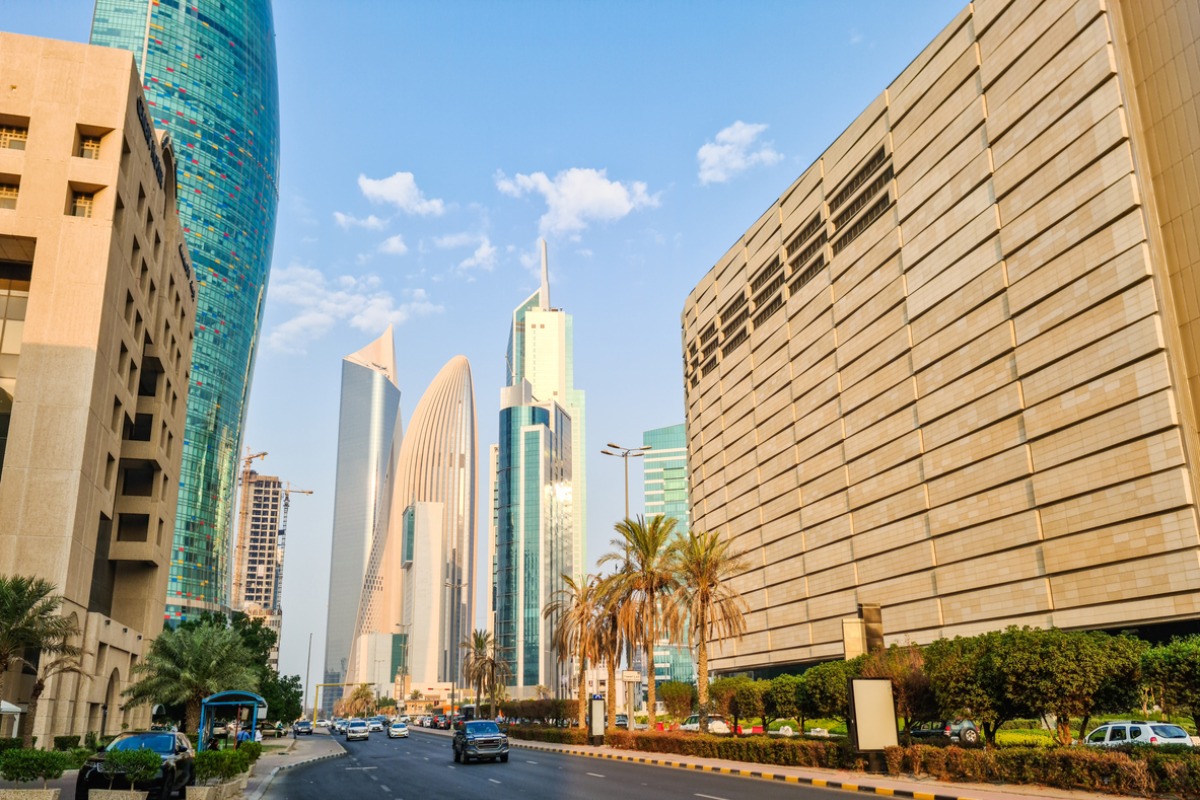
Photo: iStock
Otília Sári
17/02/2026 14:29
At that time neighboring countries were mostly covered with sand with more conservative norms: Camels were also occupants of the Sheikh Zayed road in Dubai, Saudi Arabia shifted towards a stricter Islamic norm compared to previous decades – which included more rigid enforcement of women’s dress and behavior in public.
Bahrain discovered oil in 1932, Kuwait and Saudi Arabia in 1938 and the UAE 20 years later while Oman in 1964.
But why did Kuwait become the most advanced country of the Gulf by the 80s?
Kuwait began exporting oil earlier than most Gulf states and was a major oil exporter by the early 1950s. Its oil revenues funded rapid modernization of infrastructure, education, public services and a high standard of living through the 1950s–70s.
Kuwait was a pioneer in economic diversification relative to other GCC states — it created the Kuwait Investment Authority, the world’s first sovereign wealth fund, in the late 1950s and early 1960s, channeling oil revenues into global financial assets rather than just domestic consumption.
Kuwait established Kuwait University in 1966, which became a regional center for higher education attracting students from neighboring countries.
The creative industry and press were influential across the Arab world. Kuwait’s newspapers and magazines were known for relative freedom of expression, and it became a haven for writers, poets and journalists.
Kuwaiti society in the 1960s–1970s embraced relatively liberal cultural norms, including Western-style dress among many women, reflecting broader social openness compared to conservative standards elsewhere in the Gulf.
Clothes from European fashion houses were widely available. Trendsetters preferred small ateliers and custom-made perfumes as a sign of sophistication. As a result, by the 60s throughout the 70s and 80s women were highly visible, impeccably dressed, and central to economic and cultural life. Women wore pencil skirts, silk blouses with high heels, perfectly manicured nails and immaculate hair and makeup, appearing without the hijab.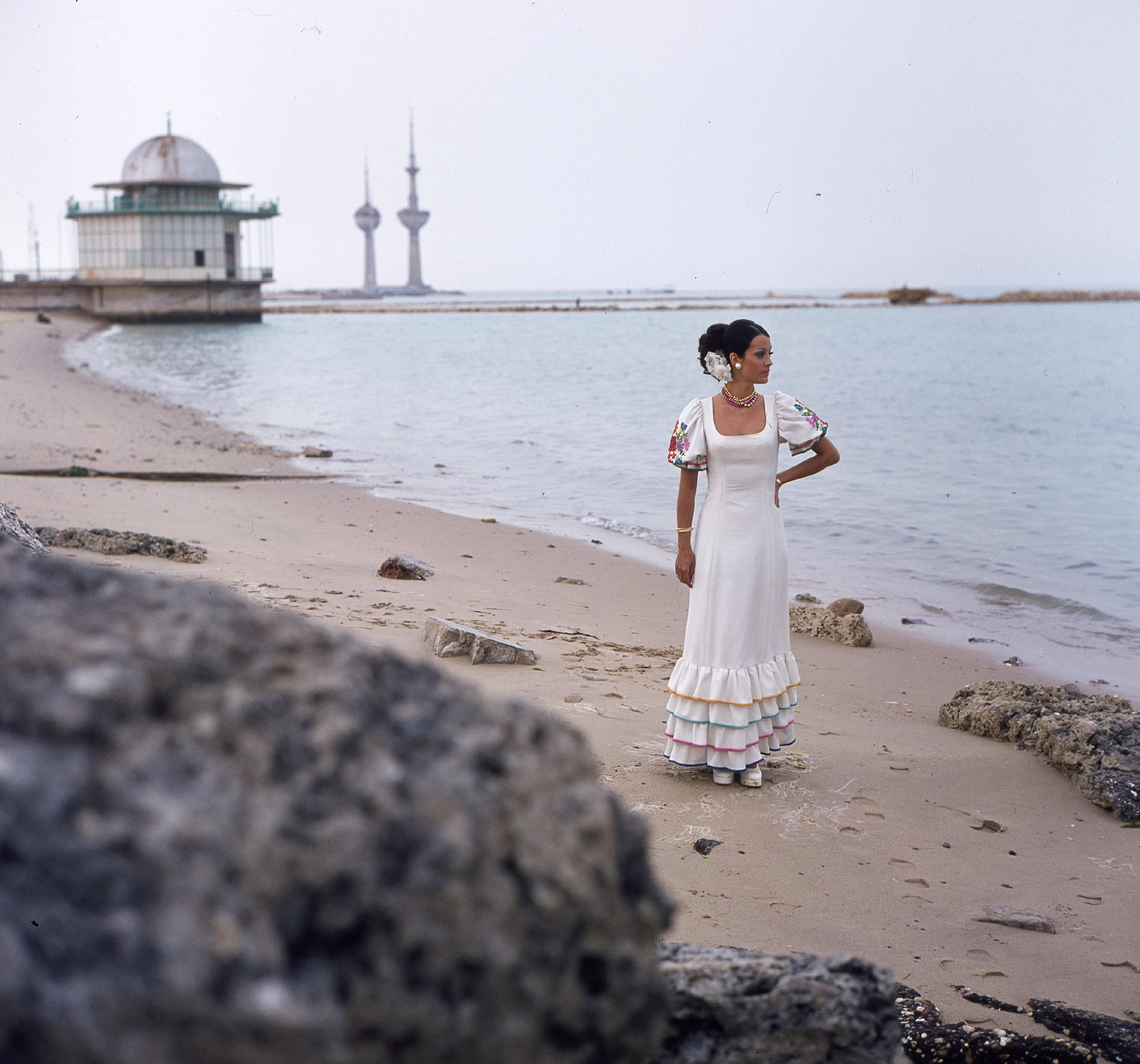
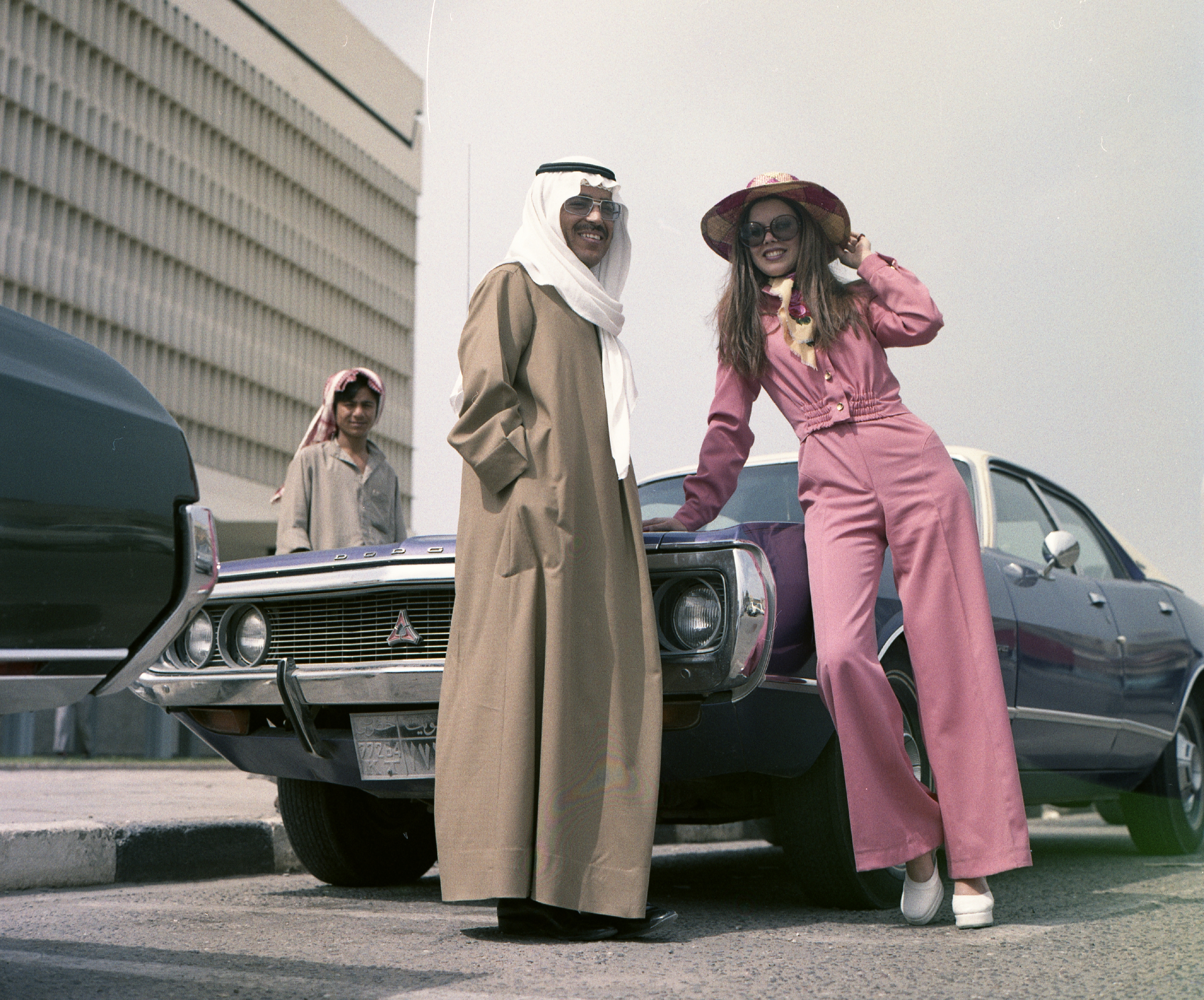
Kuwaiti students, both men and women, were sent abroad particularly from the 1950s onward — especially to cities like London, Cairo and the French-speaking world. Lulwa Al-Qatami, for example, became the first Kuwaiti woman to study overseas and later served as university director and UNESCO ambassador — illustrating how women were key in educational leadership. Women played important roles: started working in banks, holding higher positions, boosting Kuwait’s social life, shaping the creative culture and general outlook of the city. Making it vibrant, and economically diversified, without a doubt, contributing to the country’s wealth.
Kuwait had a constitution and elected parliament (since 1962), earlier and more robust than in other Gulf states — a structural difference giving space for political debate and media freedom. Paradoxically this democratic structure also led to a barrier for women to vote and surprisingly it slowed down women’s suffrage allowing its women’s citizens to vote from 2005, being one of the last GCC countries to give this right.
The Kuwaiti Dinar was introduced in 1961 after Kuwait became independent, replacing the Gulf Rupee.
From its early decades, the dinar was valued quite high relative to currencies like the US dollar. By the 1970s it was already among the highest-valued currencies in the world.
Its position as the top-valued currency in pure exchange rate terms has been widely recognized since at least the early 2000s and continues through 2025. Between 2003 and 2007, the dinar was pegged directly to the US dollar; since 2007 it has been pegged to a broader currency basket, which helped stabilize and sustain its high valuation
The 1990 Iraq invasion came as a shock for all Gulf countries. The Kuwaiti state collapsed overnight, banks were looted, cultural institutions destroyed, and women feared violence. Kuwait regained its independence through a US-led international military coalition acting under United Nations authority six months later.
Like after every trauma, modesty became associated with safety. Reducing visibility felt like shielding.
However, by today Kuwait became financially strong but psychologically cautious.
Taste in the region is still refined, Kuwaiti designer clothes well sought after until today. I find myself finding the most beautiful pieces in Dubai’s Global Village, Kuwaiti pavilion, and see my Emirati friends traveling to Kuwait to shop for the most refined abayas.
The author is a Middle East expert.