Photo: X/Stratcom
Eurasia
29/03/2026 22:35
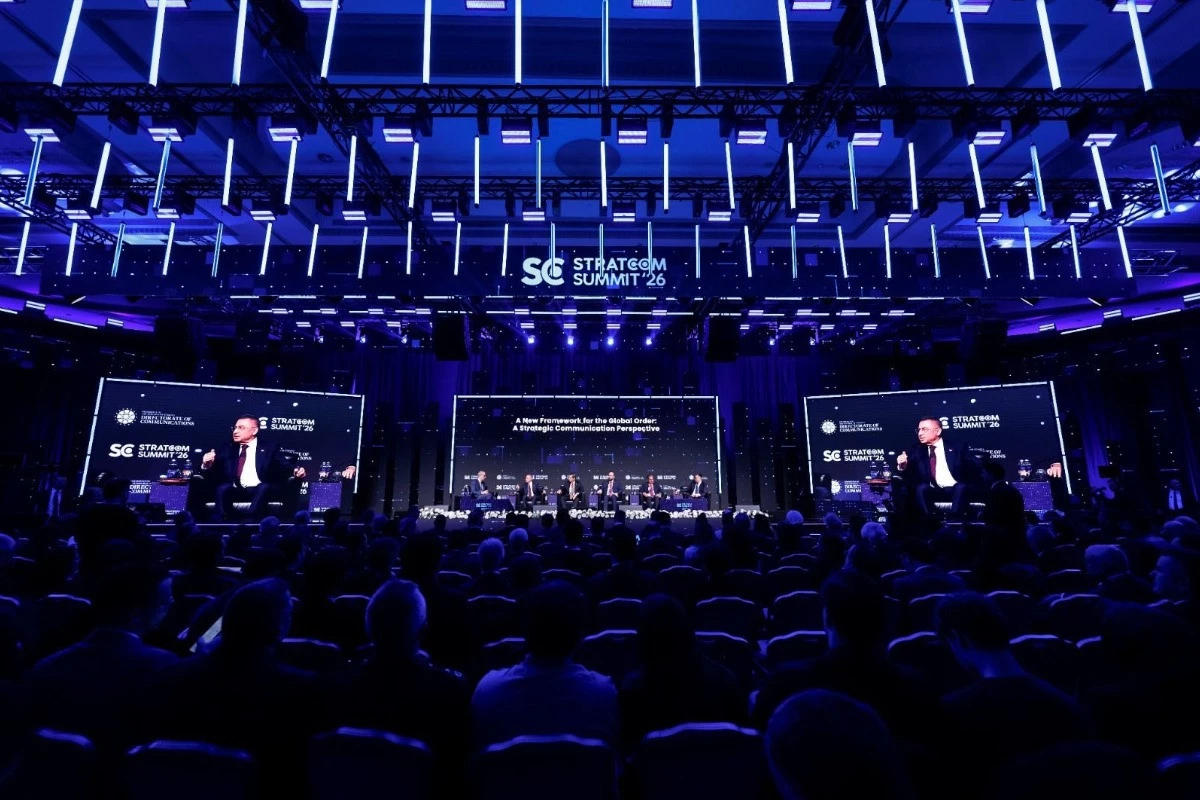
In a video message delivered to the Summit, Recep Tayyip Erdoğan, President of Türkiye, expressed his satisfaction in welcoming participants to Istanbul, describing the city as a meeting point of continents, cultures, and civilizations. He emphasized that the post-World War II international system is facing a deep legitimacy crisis, with its institutions and norms increasingly losing effectiveness. In a period marked by escalating conflicts, crises, and humanitarian tragedies—particularly in Gaza—he stressed that restoring peace, stability, and justice has become more urgent than ever.
Addressing the Summit, Cevdet Yılmaz, Vice President of Türkiye, underlined the strategic importance of communication in today’s complex environment, noting that it has become a key component of internal security. He highlighted its role in strengthening societal resilience, ensuring access to accurate information, and increasing resistance to disinformation. He also pointed out that the current period is defined by interconnected global and regional crises, while the international system’s capacity to ensure justice and stability continues to erode.
In his opening remarks, Burhanettin Duran, Head of Communications of the Presidency of the Republic of Türkiye, stated that the Summit addressed both the technical dimensions of strategic communication and the multidimensional crises shaping the international system, along with the narratives that deepen these crises. He argued that the post-World War II order has moved beyond gradual erosion and that the international community is entering a new and uncertain era. Referring to Immanuel Wallerstein, he remarked that “we are at the end of the world as we know it,” stressing that what was once theoretical foresight has now become a tangible global reality.
In his address, Hakan Fidan, Minister of Foreign Affairs of Türkiye, described the current global moment not as simple instability but as a “systemic rupture” caused by deep structural disruption. He argued that the international system has lost its moral compass, strategic coherence, and ability to generate legitimacy, resulting in a dysfunctional and unsustainable model of global governance. According to Fidan, Türkiye had long warned about this structural decay, and today even those who benefited from the system are beginning to confront its consequences. He framed the central question of the era as whether the international system still possesses the authority and credibility to govern relations based on justice and trust.
Fidan also emphasized that geopolitical conflict is now accompanied by an equally intense struggle over narratives. He argued that information has become a battlefield where perception is shaped and truth is often obscured, pointing in particular to Gaza as an example of competing and manipulated narratives. While he noted that global public awareness is shifting, he stressed that moral clarity alone is insufficient without the ability to shape communication effectively. He called for de-escalation, diplomacy, and stronger regional ownership, highlighting Türkiye’s active diplomatic engagement and its commitment to building a more stable, cooperative regional order.
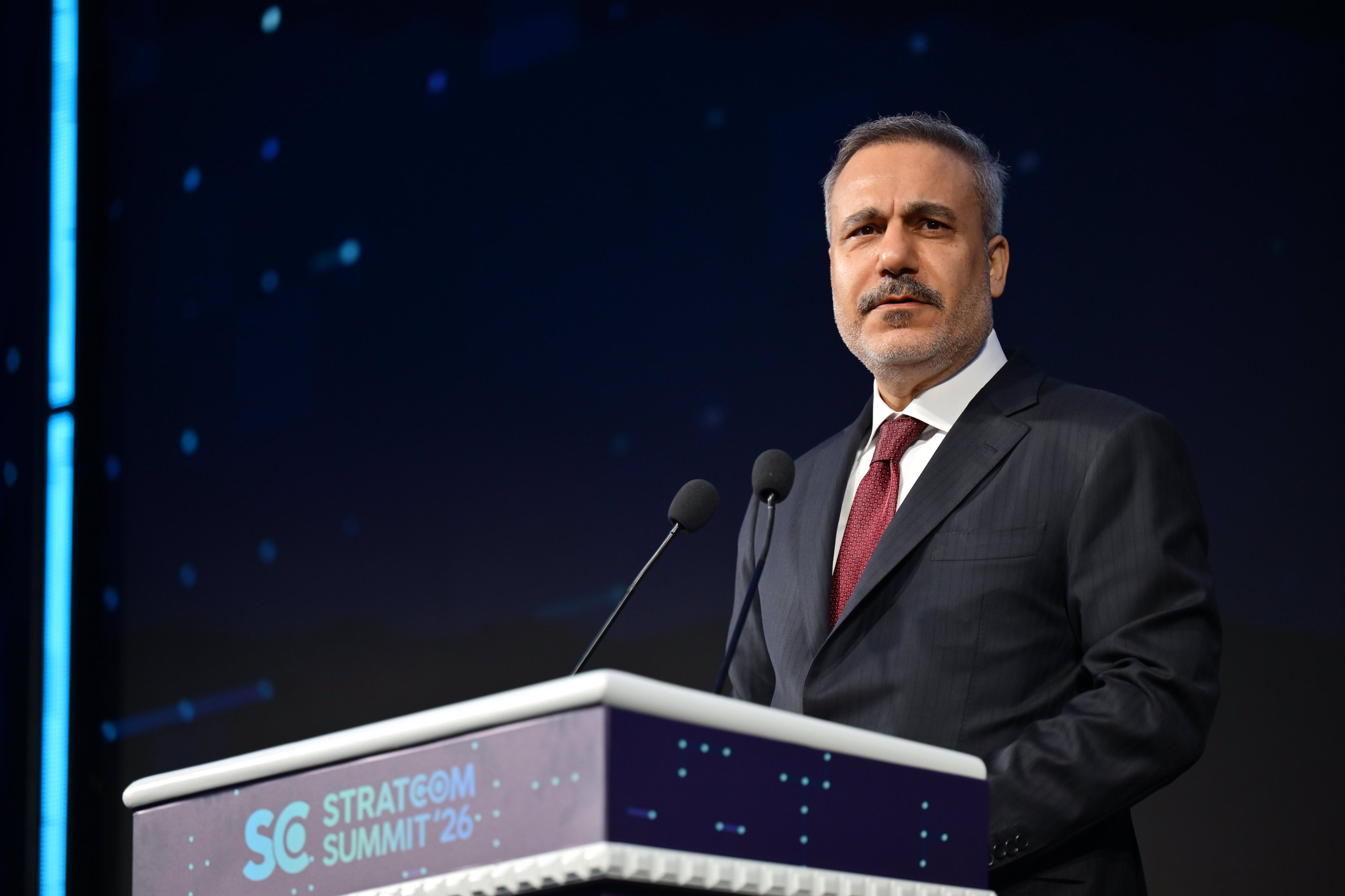
In his closing speech, Burhanettin Duran, Head of Communications of the Presidency of the Republic of Türkiye, summarized the Summit as a productive and intellectually rich platform that brought together a diverse global community from media, academia, and civil society. He highlighted that discussions over the two days covered a wide spectrum of issues, including technology, diplomacy, crisis management, and the fight against disinformation, while also opening avenues for future cooperation.
Presenting the Summit’s Goodwill Declaration, Duran emphasized that information should be understood as a core element of national and global security, and that communication functions both as a tool and a line of defense against disinformation. The declaration stressed the need for ethical use of digital technologies, access to accurate information as a fundamental right, and the urgency of reforming a fragmented international order. It also reaffirmed commitments to diplomacy, regional stability, human-centered policies, and the creation of a transparent, truth-based global communication ecosystem.