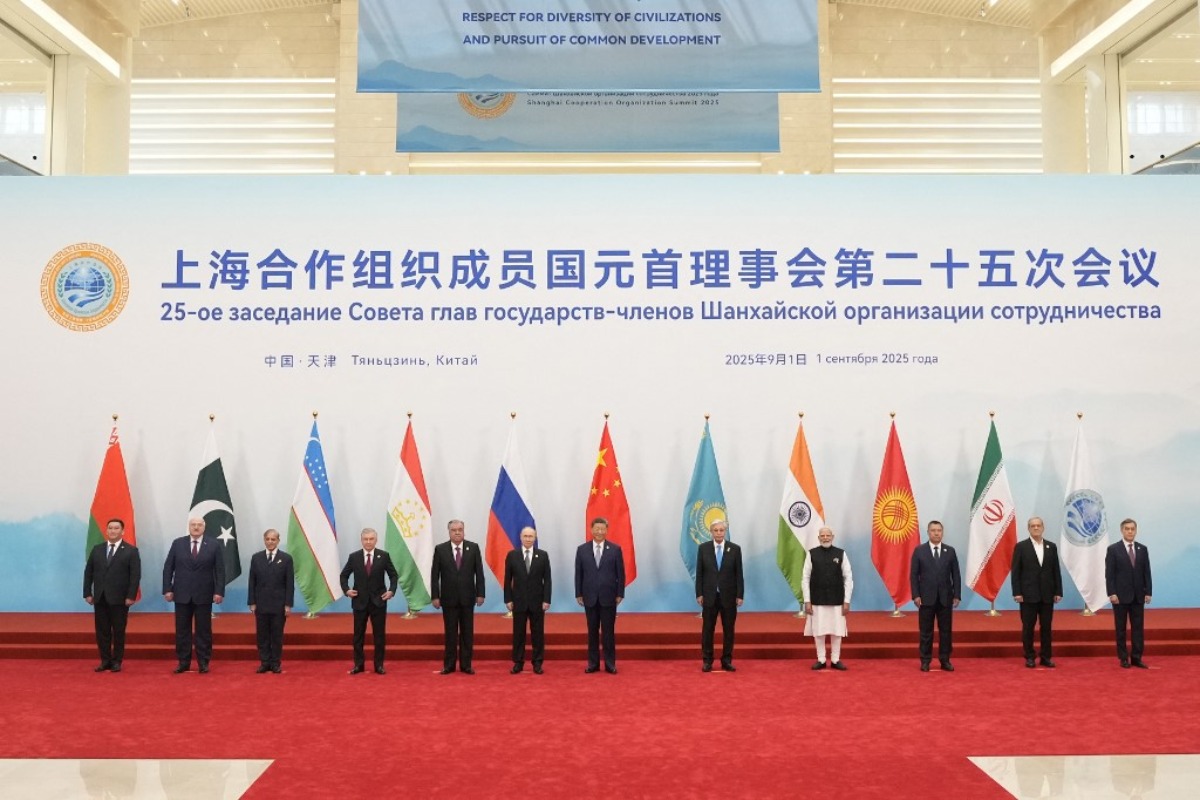
Photo: AFP/pool/Suo Takekuma
Dr. Zhang Weipeng
27/12/2025 09:00
The multi-polarization of the world is the result of the development of the times and a realistic choice for human society to move towards progress. In the 1950s and 1960s, a large number of colonial and semi-colonial countries in Asia, Africa and Latin America gained independence as new nation-states, initiated the establishment of solidarity and mutual assistance organizations such as the Non-Aligned Movement and the Group of 77, and gradually became an important international force, promoting the multipolar development of the world pattern.
After the Cold War, the process of multi-polarization entered a period of rapid development. European countries played a significant role in international affairs, emerging market and developing countries rose collectively, and regional organizations such as ASEAN, the African Union, the BRICS, and the Shanghai Cooperation Organization continued to gather strength. These factors collectively pushed the international balance of power toward a more balanced direction.
However, a few countries are attempting to replace and subvert the universally recognized principles of international law through a “rules-based order” and monopolize the leading role in international affairs. Such actions, inherently hegemonic and power politics, are deviated from the spirit of international law undermining the stability and effectiveness of the global governance system and seriously threatening world peace and stability.
Currently, most members of the international community agree to promote a multipolar world, but there is no consensus on how to further develop this process or how to participate in and promote it. To address these issues, China advocates for promoting an equal and orderly multipolar world.
“Equal multipolar world” is specifically manifested in equal rights, equal opportunities, and equal rules.
“Equal rights” means that the sovereignty and political independence of all countries shall be inviolable. All countries, regardless of national strength, size, or development differences, shall enjoy equal rights to development and equal voice, decision-making, and participation in international affairs.
“Equal opportunities” means that all countries enjoy equal development opportunities in participating in the international division of labor, obtaining international resources, and conducting technological cooperation, without being unreasonably restricted by geopolitical factors or unilateral sanctions. International affairs are handled through consultation, and the future of the world are jointly controlled by all countries.
“Equal rules” means that the formulation, implementation and supervision of international rules are jointly participated by all countries. International rules reached through unanimous consultation should be observed by all without exception. All countries must abide by unified rules and standards and oppose rule hegemony and double standards.
“Orderly multipolar world” is specifically manifested in orderly situations, orderly institutions, and orderly collaboration.
“Orderly situations” means that the evolution of the international balance of power needs to follow the principles of gradualism and peacefulness to avoid international conflicts caused by sudden changes in the power structure.
“Orderly institutions” means building a global governance institutional network with clear levels, complementary functions, and coordinated linkages, and making the implementation of the system more transparent, inclusive, and efficient.
“Orderly collaboration” means that when responding to global challenges, countries should conduct international cooperation in accordance with the basic principles of equal consultation, mutual benefit and win-win results, and form a governance pattern with coordinated linkage among multiple subjects.
An equal and orderly multipolar world avoids the value paradox of “the minority deciding the fate of the majority” and the disorderly game of “might makes right”. It is the rational choice of the international community on “what kind of international order and international relations are more sustainable”.
To promote the realization of an equal and orderly world multipolarity, we must confront the “law of the jungle” with international rule of law, maintain the core position of the United Nations in world peace and security affairs, and promote the shift of international order from power led to rule of law led. We must use “great unity” to break through “small circles”, resolutely oppose the establishment of exclusive military alliances and ideological groups, break down regional barriers and camp divisions, and unite global governance forces.
As the biggest developing country of the world, China not only advocates an equal and orderly multipolar world but also actively practices it by carrying out various forms of international cooperation. China firmly upholds the norms governing international relations based on the purposes and principles of the UN Charter, participates extensively in international treaties and mechanisms, and has joined nearly all universal inter-governmental organizations and over 600 international conventions and amendments. China actively promotes coordination and positive interaction among major powers, and promotes the development and revitalization of the Global South. China has become one of the top three trading partners of over 150 countries and regions.
The multi-polarization of the world is not an accidental phenomenon but an inevitable trend of historical development, reflecting humanity’s shared pursuit of lasting peace, fairness, and justice. When small countries are no longer ignored due to their weakness, when major powers no longer dictate the rules with hegemonic thinking, when every country’s voice is equally heard and every development aspiration is appropriately addressed, then this kind of multi-polarization will be the key to resolving the current global governance dilemma. We should work together to promote an equitable and orderly multipolar world, providing greater stability and certainty to a turbulent world, and jointly move towards a more secure, prosperous, and inclusive future!
The author is Associate Research Fellow of China Institute of International Studies