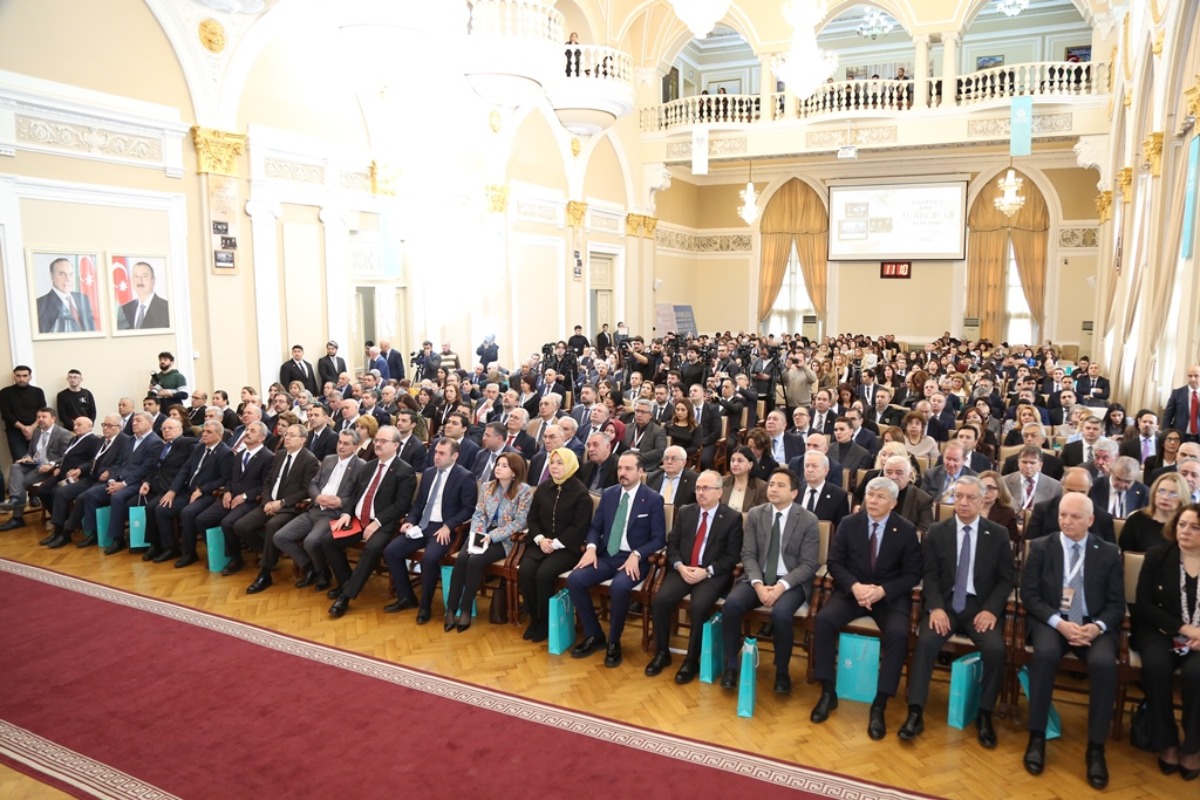
Photo: Turkic Academy
Eurasia
28/02/2026 16:41
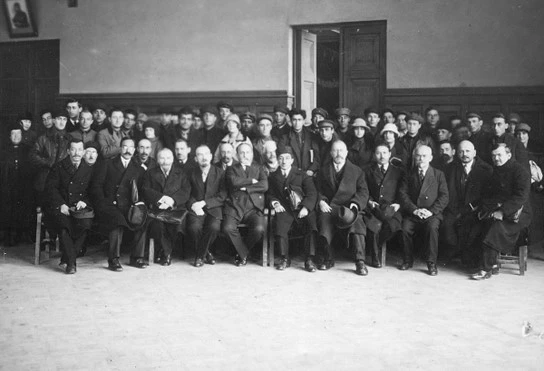
Held in 1926 at the Ismailiyya Palace in Baku, the First Congress represented not only a landmark in the detailed study of the Turkic language but also a historic turning point in the effort to establish a shared linguistic, conceptual, and methodological unity across the Turkic world.
The Baku Turkology Congress, widely recognised as a milestone in Turkology and the history of Turkic culture, took place in Baku from 26 February to 6 March 1926. Taking place in the Eurasian landscape reshaped by the collapse of Tsarist Russia and the 1917 Bolshevik Revolution, this event was not merely an academic congress but a historic moment aimed at fostering the cultural integration, modernisation, and identity formation of the Turkic peoples. As a concrete reflection of İsmail Gaspıralı’s ideal of “Unity in Language, Thought, and Action,” the Congress also served as a platform for the Soviet administration’s strategy of reshaping the peoples of the East along its own ideological axis.
The organising committee, chaired by Samed Agha Aghamalioglu, Chairman of the Central Executive Committee of Azerbaijan, described the Congress as “a cultural revolution that would liberate the peoples of the East from the darkness of the Middle Ages.” The Congress’s core objectives were articulated under three principal headings: “alphabet unity,” “cultural integration,” and “scientific coordination.”
Participants: The Congress convened leading scholars and prominent statesmen of its time. The Congress brought together 131 delegates, including representatives from Azerbaijan, Türkiye, Tatarstan, Bashkortostan, Kazakhstan, Uzbekistan, Turkmenistan, Crimea, Yakutia, Germany, Hungary, and Iran. Notable participants included Mehmet Fuad Köprülü, Hüseyinzade Ali Bey, and İsmail Hikmet Ertaylan from Türkiye; the distinguished Russian orientalists Vasili Bartold and Sergey Oldenburg; Theodor Menzel from Germany; as well as Bekir Çobanzade, Galimcan İbrahimov, and Samed Agha Aghamalioglu representing the Turkic world.
Sessions and Core Discussions: The Congress convened 17 sessions, addressing matters of alphabet reform, orthographic standardisation, terminology development, and history education. Following extensive debates on alphabet reform, a vote was held in which the principle of transition to the Latin alphabet was adopted by 101 votes in favour and 7 against. During the sessions devoted to common language and terminology, although adherence to Turkic linguistic roots was recommended, a decision was ultimately taken that, in practice, local dialectal differentiation would be recognised. With regard to the teaching of history, the papers presented by Mehmet Fuad Köprülü lent substantial support to the view that Turkic history should be examined as an integrated whole within the disciplinary framework of “Turkiyat” (Turkic studies).
The Congress and the Role of Mehmet Fuad Köprülü: Participating in the Congress upon the instruction of Mustafa Kemal Atatürk, Fuad Köprülü assumed an active role by serving as chair of the praesidium, thereby exerting a strategic influence on Türkiye’s cultural and alphabet policies. Throughout the proceedings, Köprülü closely analysed the prevailing inclination toward the adoption of the Latin alphabet. In the report he subsequently submitted to Atatürk, he underscored that this transformation had become inevitable for the Turkic peoples of the Soviet Union and warned that should Türkiye remain outside this process, it would risk severing its cultural ties with the wider Turkic world. Both this assessment and his calls for the institutional and methodological strengthening of Turkology studies in Türkiye elevated his presence at the Congress into a forward-looking intellectual mission whose impact extended well beyond the event itself.
Decisions Adopted and Their Broader Impact: The Congress, which effectively mapped out a programme of cultural and linguistic reform across the Turkic world, adopted several landmark resolutions. Among the most consequential were the gradual abandonment of the Arabic script in favour of a Latin-based “New Turkic Alphabet” and the endorsement of orthographic principles grounded in the maxim “one sound, one letter.” In addition to language and alphabet reform, the Congress adopted resolutions calling for the expansion of mother-tongue education and for the coordinated development of historical and folkloric research on a common scholarly basis. With the implementation of these strategic measures, the period between 1926 and 1930 witnessed a rapid process of transformation across a broad geography of the Turkic world; literacy campaigns were launched, and, facilitated by the adoption of a common alphabet, cultural boundaries became increasingly permeable. Indeed, a newspaper printed in Baku could be readily read in Tashkent or Kazan, thereby fostering a strong communicative cohesion across the Turkic world. The decision adopted at the Congress to "transition to the Latin script" constituted the most significant external catalyst accelerating the reform process in Türkiye. Atatürk utilised the developments in Baku as a strategic lever and, in implementing the Alphabet Reform in 1928, reinforced the argument for "alphabet unity with the Turkic world". Between 1928 and 1930, a substantial degree of alignment in alphabet policy was achieved between Türkiye and the Soviet Turkic republics.