Photo: AFP/NurPhoto/Ying Tang
Erik Breier
19/12/2025 23:05
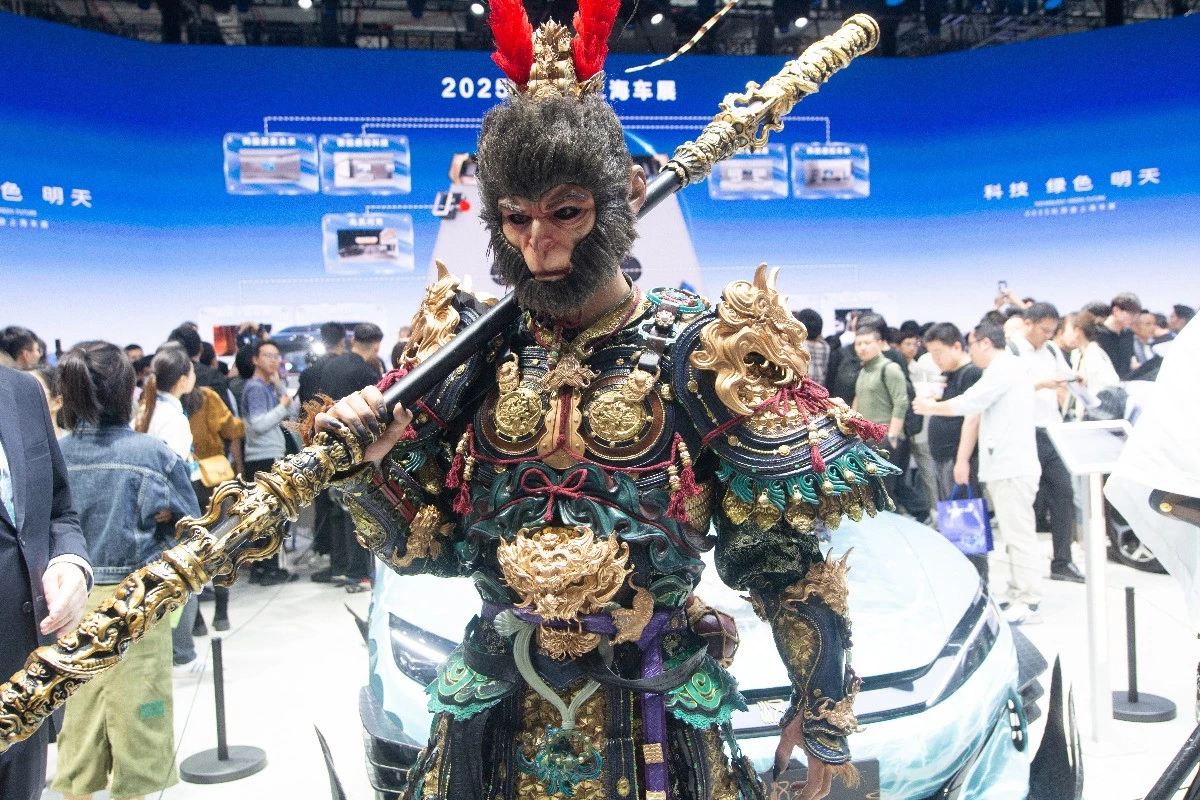
Chinese developers have produced globally popular titles before, but the release of Black Myth: Wukong in 2024 marked a true breakthrough. It is no surprise that its planned sequel, Black Myth: Zhong Kui, has already attracted enormous interest and a dedicated fan base even before its release. This phenomenon clearly shows that Chinese culture and pop culture are gaining popularity worldwide — a trend actively supported by the Chinese government. The Black Myth phenomenon goes beyond the success of a single game; it is part of a comprehensive cultural strategy aimed at bringing Chinese mythology and tradition to gamers around the world.
Developed by the Chinese studio Game Science, Black Myth: Wukong took the gaming industry by storm. The game sold 10 million copies worldwide in just three days, making it one of the fastest-selling video games in history. On the American platform Steam, it reached 2.4 million concurrent players, a record for single-player games. With an estimated budget of around $70 million, the developers earned close to $1 billion in revenue.
However, the true significance of this success goes far beyond numbers. The game’s popularity represents not only a commercial triumph but also a cultural breakthrough, as it is deeply rooted in Chinese culture and folklore. For the first time, a Chinese studio managed to produce a AAA title that achieved global acclaim and could compete with Western developers.
The key to its success lies in its modern adaptation of the classic Chinese novel Journey to the West. The central figure, Sun Wukong, the Monkey King, has been a cultural icon in China for centuries. Now, millions of international gamers are being introduced to his story. This cultural bridge is especially significant, as for many Western players this is their first encounter with Chinese mythology.
According to Joseph Nye’s theory of soft power, a country exercises influence most effectively when its culture, values, and policies become attractive to others. China has been deliberately building its digital soft power for years, and the video game industry has become one of its key pillars.
China’s major technology conglomerates play a vital role in this effort. Tencent, the country’s largest tech giant, has built a global gaming empire through strategic investments. It owns Riot Games, the developer of League of Legends, and holds a 40% stake in Epic Games, the creator of Fortnite. Many analysts argue that this expansion is not a coincidence, but part of a deliberate cultural strategy.
Chinese games often incorporate traditional cultural elements, mythological motifs, and philosophical themes. Titles such as Genshin Impact, Honor of Kings, and now Black Myth: Wukong all follow this approach — offering engaging gameplay while simultaneously conveying Chinese cultural values.
Within the framework of the Digital Silk Road Initiative, China aims to promote its culture through digital infrastructure and content production. Video games play a special role in this strategy, as they reach young audiences directly.
On 19 August 2025, the first anniversary of Black Myth: Wukong, Game Science unexpectedly announced the second entry in the series, Black Myth: Zhong Kui. The choice is symbolic: rather than a simple continuation, the new game is built around a completely different mythological figure. In Chinese folklore, Zhong Kui is the god who banishes spirits, travelling between hell and earth. This promises a darker, more mysterious atmosphere than its predecessor. The developers consciously chose this direction to show that Black Myth is not merely a game — it is the beginning of a full Chinese mythological universe.
The success of Black Myth: Wukong has transcended the gaming industry, sparking a global Chinese cultural renaissance. International players have begun exploring the original Journey to the West, delving into Chinese mythology and the backstories of its characters. Even in Hungary, many gamers started reading the novel to better understand the game’s narrative. Jim R. McClanahan, a Journey to the West scholar, compiled a 214-page catalogue detailing Sun Wukong’s abilities — originally for academic purposes — which has since become popular among gamers, fan-fiction writers, and artists.
The cultural impact is also visible within China. The 36 historical sites featured in the game, including the Hanging Temple and the Jade Emperor Temple in Jincheng, have seen a surge in tourism. The Shanxi Provincial Department of Culture and Tourism released a promotional video highlighting these real-world locations, popularising what has come to be called “Wukong tourism.”
The success of Black Myth: Wukong and the anticipation surrounding Black Myth: Zhong Kui indicate that China’s cultural soft power has reached a new level. It is no longer just about economic or technological development — Chinese culture, values, and narratives have become appealing to global audiences.
The video game industry plays a crucial role in this process. For decades, Hollywood films and K-pop dominated global cultural exports; now, Chinese video games are emerging as new players on the world stage. The Black Myth series shows that the right combination of cultural content, advanced technology, and smart marketing can create a genuine global cultural phenomenon.
In the future, more Chinese cultural products are likely to follow this path. Black Myth is not just a successful video game franchise — it marks the beginning of a new era in which China becomes an active shaper of global pop culture.
The author is a PhD student at Corvinus University of Budapest