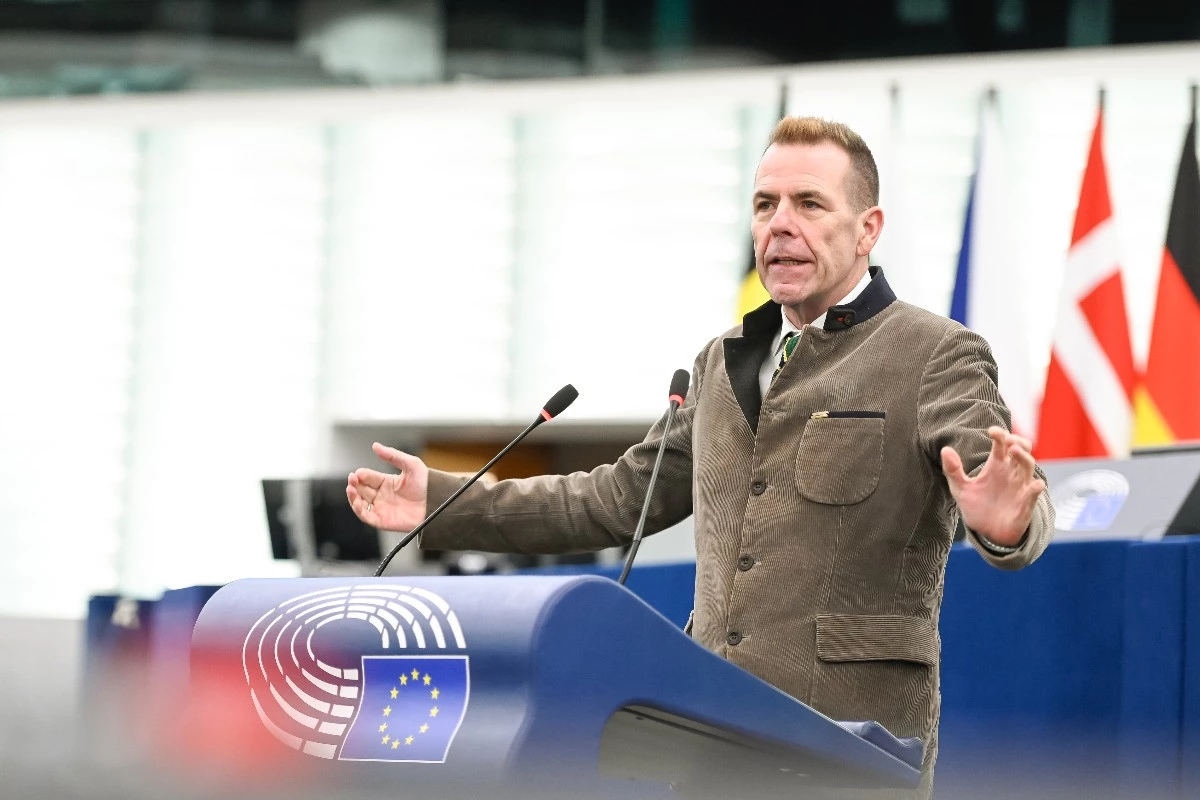
Photo: European Parliament
Mariann Őry
17/12/2025 11:05
The FPÖ insists on Austria's neutrality and opposes plans to participate in the Sky Shield and other attempts at getting closer to NATO. Why do you find Austria's neutrality important?
Austria’s permanent and constitutionally granted neutrality is not just a constitutional principle — it is part of our national identity and a cornerstone of our credibility in international affairs. It allows Austria to be a voice for dialogue, not confrontation; for peace, not war.
What are the goals of those political forces who want to give up the neutrality?
Those political forces, not just in the EU but especially in Austria represented by the Austrian People’s Party, the Socialists, the Liberals and the Greens, who want to abandon neutrality are essentially trying to turn Austria into a follower of Brussels’ militaristic agenda. Their goal is to align Austria with a bloc policy that serves foreign interests rather than Austrian ones.
What do the people say?
But the people are very clear on this issue: a large majority of Austrians want to keep our neutrality. They understand that neutrality has kept us safe and respected for decades. The Freedom Party is the only one that not only respects this but is protecting this core value of our state.
Austria traditionally has a bridge role, thanks to its neutrality. Can your country maintain this position in the current context of bloc formation, de-risking, trade wars and sanctions?
Yes, and it is more important than ever that Austria maintains its bridge role. In a world increasingly divided by blocs and sanctions, countries that can build bridges and facilitate dialogue are desperately needed. Unfortunately, the current Austrian leadership is pushing Austria deeper into confrontation — economically with sanctions that hurt our own citizens, and militarily by aligning ever closer with NATO. By staying neutral and independent, we can talk to all sides, mediate conflicts, and help rebuild trust. That is the true Austrian spirit and should be European as well — not division and escalation, but cooperation and peace.
Both the FPÖ and Fidesz are strong proponents of peace, while the EU leadership holds on to its warmongering rhetoric. Which strategy do you think represents more the will of the European people?
The people of Europe are tired of war rhetoric and escalation. They want peace, stability, and prosperity — not another Cold War. The warmongering coming from Ursula von der Leyen and others in Brussels is completely detached from the reality ordinary Europeans are facing: high prices, illegal migration, and fear of conflict. The FPÖ and Fidesz stand for a Europe of peace and sovereignty, where nations decide their own future and diplomacy replaces aggression. I believe the will of the European people is clearly on the side of peace — not endless confrontation.
Do you think the EU can change its attitude?
Whether the EU can change depends on the courage of member states to stand up and say “enough.” We must reclaim the European Union as a peace project, not a war machine.
What do you expect from Donald Trump's peacemaking efforts?
President Trump has done everything right and is indeed the guarantor of peace, which is why I am supporting him. He brings conflicting parties to the table and follows a principle that the EU lost sight of long ago: better to talk for hours than shoot for a second. I believe that without Trump and his efforts, the outlook for Europe would be very bleak indeed. His record shows that he avoided new wars and pushed for dialogue where others only escalated.
How do you see the Hungarian government's role?
As for Hungary, I see the Hungarian government as a courageous example within Europe. Prime Minister Orbán has consistently called for peace talks and refused to be dragged into the EU’s war hysteria. This is exactly the kind of responsible, sovereignty-based policy Europe needs. Prime Minister Orbán understood: peace cannot be achieved through more weapons and sanctions — only through diplomacy and respect for national interests.